




Here is a standard glossary list of terms related to the electrical components in powered cubicle furniture.
Amperage
The amount of power necessary to run an electrical appliance or appliances.
Base Power-In-Feeds
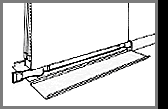 Provides power to the powerways (electrical conduits within the base of the panel) from the buildings main power source.
Daisy Chaining
The ability to link the on / off mechanism of several task lights to one switch in order to free up more receptacles. Check with your electrician to determine whether this operation is allowed in your local electrical codes.
Dedicated Circuit
One line (circuit) within the panels wiring system which provides exclusive power to sensitive electrical machinery.
Doghouse
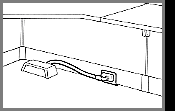 Receptacle, above the floor, connected to the building's power
Grommet
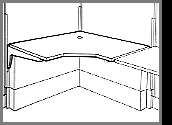 A cut out in the top of worksurface that allows the user to access power.
Hardwired
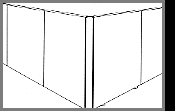 The electrical connection of a panel system to the building's power source. Can be from floor to the base of the panel or from the ceiling to the floor.
Harness
The concealed cables within the system's power system.
Interface
The points at which the systems electrical power is connected to the building's power source.
Junction Box
A box which allows for the transition of cables when they are split and must be joined together.
Lines
The designated circuit (#1, 2, 3, 4 or dedicated) for a receptacle.
Panel Base Cavity
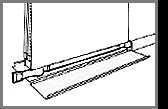 Area in base of the panel in which powerways pass through.
Power Pole
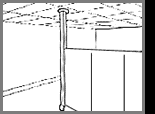 Brings power from the ceiling to the panel system.
Powerway
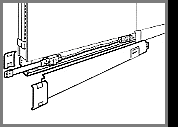 Interconnected electrical cables which distribute power throughout
Raceway
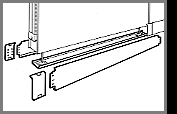 The physical part of the panel which provides the conduit for
Receptacle
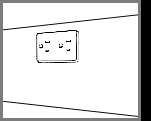 The outlets connected to the powerways. Receptacles are designed to have varying amounts of outlets and line designations. The number of outlets in the receptacle determines the reference for that receptacle. In other words a receptacle with one outlet is a simplex receptacle. A receptacle with two outlets
Snap Lines
A temporary mark on the floor (made with chalk or tape) to determine the actual location of the panels. This operation assures proper placement of the base power-ins. Also, it is an effective tool to guarantee proper aisleways and to observe where the furniture actually fits in the space.